The Context: Why Crypto Alongside Hard Assets?
My primary investment thesis is built around hard assets that generate real cashflow — shipping operators, mines, pipelines, energy producers. These pay dividends. They have tangible assets. They are not reliant on sentiment. Crypto is the opposite: pure store-of-value/speculation, no cashflow, maximum sentiment-dependence. So why hold it? Because a 5% allocation to an asset that can 2–3x in a bull market adds meaningful portfolio outperformance without risking the core thesis.
Passive Income Beyond Stocks: Debitum Review 2026 — 15% P2P yield with forest & agricultural loans? Honest reality check.
Bitcoin: The Only Long-Term Crypto Conviction
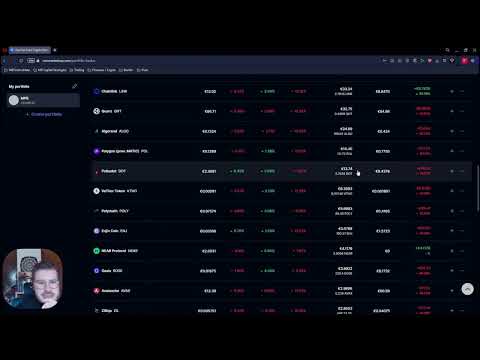
Bitcoin is the only crypto I would consider holding through a full market cycle. The case: fixed supply (21M coins), growing institutional adoption (spot ETFs launched 2024), and a developing narrative as digital store-of-value. The 2024 halving (April 2024) reduced new BTC issuance — historically this has preceded the major bull cycle. The +158% in 2024 reflects that cycle. I am not calling a top here; what I am saying is that BTC has stronger long-term structural arguments than any other cryptocurrency.
XRP and BNB: Speculative Satellite Positions
XRP (+199%) benefited from the 2023–2024 SEC lawsuit outcome (partial victory for Ripple) and payment-focused adoption narratives. BNB (+129%) is tied to the Binance exchange ecosystem — strong network effects, but regulatory headline risk. Both positions are significantly smaller than my BTC allocation. Mental stop: if the crypto narrative reverses structurally, I reduce these first. Compared to a BW LPG dividend or a South32 mining cashflow, these are speculation, not investment.
Tool: Financial Freedom Calculator — calculate when you can live off dividends based on your target income and current portfolio yield.
Glossary: Charter Rates explained — how spot vs time charter rates drive tanker and dry bulk stock valuations and what rate cycles mean for dividends.
Tool: Shipping Cashflow Estimator — model the daily/annual revenue of tanker or dry bulk vessels at different charter rates.
Lessons for 2026: What Would I Change?
In hindsight, a larger BTC allocation and smaller altcoin allocation would have been optimal. Altcoins underperform BTC on a risk-adjusted basis over most 2+ year windows. For 2026, my focus remains on the hard asset dividend core — but I maintain a small BTC position as the "asymmetric bet" leg of the portfolio. The Dividend Calculator is irrelevant for crypto (no yield), but it is central to how I think about every hard asset position I build.
Crypto vs. Hard Asset Dividends: The Real Trade-Off
After running both crypto and hard asset dividend positions simultaneously, here is the honest comparison for income-focused investors:
| Factor | Crypto (BTC) | Hard Asset Dividends |
|---|---|---|
| Annual Yield | 0% | 6–15% (Shipping/Mining) |
| Volatility | Extreme (50–80% drawdowns) | High (30–50% drawdowns) |
| Cashflow | Zero — price appreciation only | Quarterly/annual dividends paid in cash |
| Tax Treatment (DE) | 25% Abgeltungssteuer on gains (>1yr = 0% for some) | 25% Abgeltungssteuer on dividends + Quellensteuer |
| Inflation Hedge | Theoretical (digital scarcity) | Real (physical commodities, pricing power) |
My conclusion after 2025: Crypto belongs in a hard asset portfolio as a speculative 2–5% satellite allocation — not as core income. The dividend income from one solid tanker position (e.g., TORM at YOC ~12%) exceeds what a comparable crypto allocation would ever generate in cashflow. For income-seeking investors, the math is clear: hard assets pay, crypto speculates.
Portfolio Allocation Framework: Crypto's Place
Here is how I currently think about the crypto allocation within a hard asset income portfolio:
- BTC 2–3%: Digital gold equivalent — store of value thesis, long-term hold, never leveraged. Only add on 40%+ corrections.
- Altcoins (XRP, BNB) 0–2%: Speculative satellite. Position sized so a complete loss doesn't affect the income goal. If it goes to zero: no lifestyle impact. If it 10x: a nice surprise.
- No yield-generating crypto products: Staking, lending, DeFi — counterparty risks are opaque and not worth the complexity in a dividend-focused portfolio.
- Hard asset core (>90%): Shipping + Mining + Energy + Pipelines + REITs. This is where the income actually comes from.
Crypto Risk Management for Hard Asset Investors
If you are going to hold crypto alongside hard assets, these risk management principles matter:
- Never leverage crypto positions: The volatility of crypto assets combined with margin means total account wipeouts are possible in a single bad week. Hard asset income investors protect their income base first — never risk it on leveraged crypto.
- Custody security: Hold Bitcoin via hardware wallets or regulated custodians (no self-custody unless you understand key management completely). Exchange failures (FTX 2022) destroyed billions in uninsured crypto holdings. Your hard asset brokerage account has regulatory protections; crypto exchanges often do not.
- Tax optimization (Germany): German law requires 1-year holding period for crypto to be tax-exempt on gains (Haltefrist). Plan entries/exits around this. Frequent trading creates a cascading tax burden that destroys net returns.
- Correlation in crashes: Crypto and risk assets (equities, commodities) historically crash together in liquidity crises. Do not assume crypto provides portfolio diversification during the worst market moments — it typically doesn't.
2026 Crypto Landscape: What Changed from 2025
The crypto market evolved significantly between 2025 and 2026:
- Bitcoin ETF approval: Spot BTC ETFs in the US drew massive institutional inflows, reducing volatility and deepening the market. Bitcoin's institutional legitimacy as a reserve asset strengthened.
- Ethereum staking yields compressed: As staking participation increased, ETH staking yields fell to ~3–4%. This is no longer competitive with hard asset dividends (8–15%) once tax friction is accounted for.
- Regulatory clarity (EU MiCA): EU's Markets in Crypto Assets regulation reduced some uncertainty for European investors, but compliance costs increased for exchanges operating in the EU.
- DeFi still experimental: Despite years of development, DeFi protocols continue to experience exploits and governance failures. Not suitable as a yield source in a conservative income portfolio.
How safe is the dividend? → Dividend Coverage Ratio Explained →
Calculate your hard asset yield → YOC Calculator: Your Yield on Cost →
Crypto vs. Hard Assets: The Real Alternative
Bitcoin and Ethereum are stores of value (or speculation vehicles) — not income generators. Marco's portfolio philosophy is built on the opposite: assets that generate real cash flows, pay dividends, and have hard tangible backing. The contrast is stark:
- Crypto (BTC, ETH): No yield unless lent or staked. Price-only return. Maximum volatility. No claim on underlying cash flows.
- Tanker stocks (CMB.Tech, TORM, Frontline): 8–15% dividend yield backed by shipping contracts and real asset dayrates. Tangible ships as collateral.
- Mining stocks (Thungela, Barrick, BHP): 5–12% yield backed by proven ore reserves and production cash flows. Price of gold, copper, coal = real market prices.
- LNG stocks (FLEX LNG): 9%+ yield backed by 7–10-year time charter contracts. Charter rate locked in — cash flows nearly as predictable as bonds. See: FLEX LNG Q1 2026 analysis.
- Pipeline stocks (Enbridge): 6–7% yield backed by take-or-pay contracts (98% revenue certainty). Almost utility-grade income stability.
The conclusion: a small speculative crypto allocation (1–3% of portfolio) can coexist with a hard-asset dividend portfolio. But crypto should never substitute for income-generating positions — it generates no income by design. For income-focused investors, the hard asset sectors above offer better risk-adjusted income than crypto at current valuations. Related: Hard Assets Explained | Best Tanker Stocks 2026 | TCE Rate Guide.
Dividend Strategy Guide 2026 →
My Toolbox & Resources
Disclosure: Some links are affiliate links. This helps support our free content at no extra cost to you.
📊 Want to see why I use it daily? Read my InvestingPro Review + Best Price for the full breakdown.
Disclosure: I hold BHP in my publicly visible portfolio (Trade Republic / Scalable Capital). This is a conflict of interest. Not investment advice.
We use cookies and Google Analytics to improve your experience. By clicking "Accept", you consent to the use of cookies for analytics and ads. Privacy Policy